Scientists of the future
The international scientific, educational, and outreach project “Scientists of the Future” was launched on December 12, 2025, at Turan University, according to the staff of the School of Media and Intercultural Communication.
Sixteen Russian scientists are engaging in a dialogue with Kazakhstan’s talented youth. The initiative is led by the A. S. Pushkin State Institute of the Russian Language. During its first season, the project has already reached 2,600 participants, with plans to extend activities to school and university students in other countries.
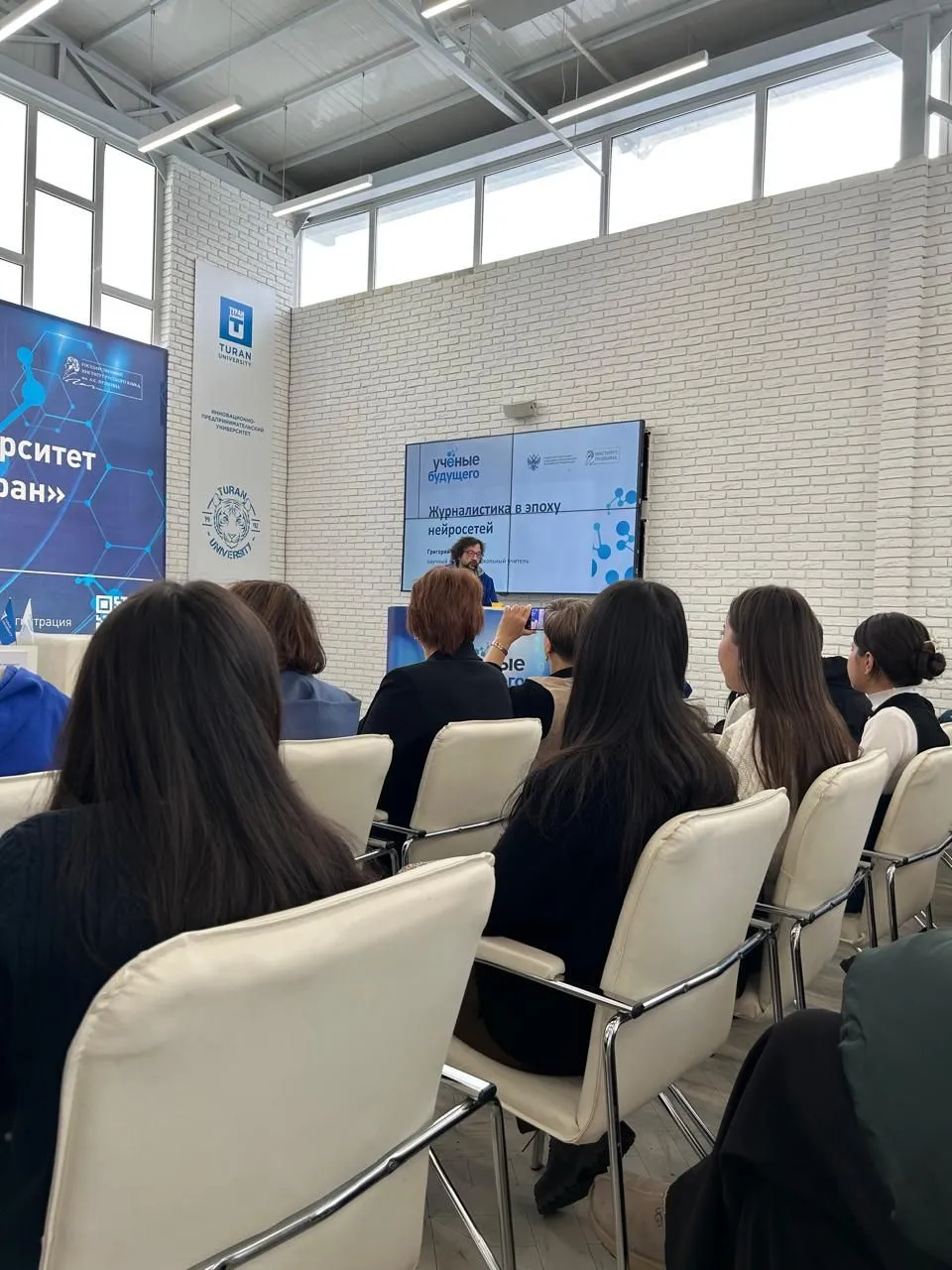
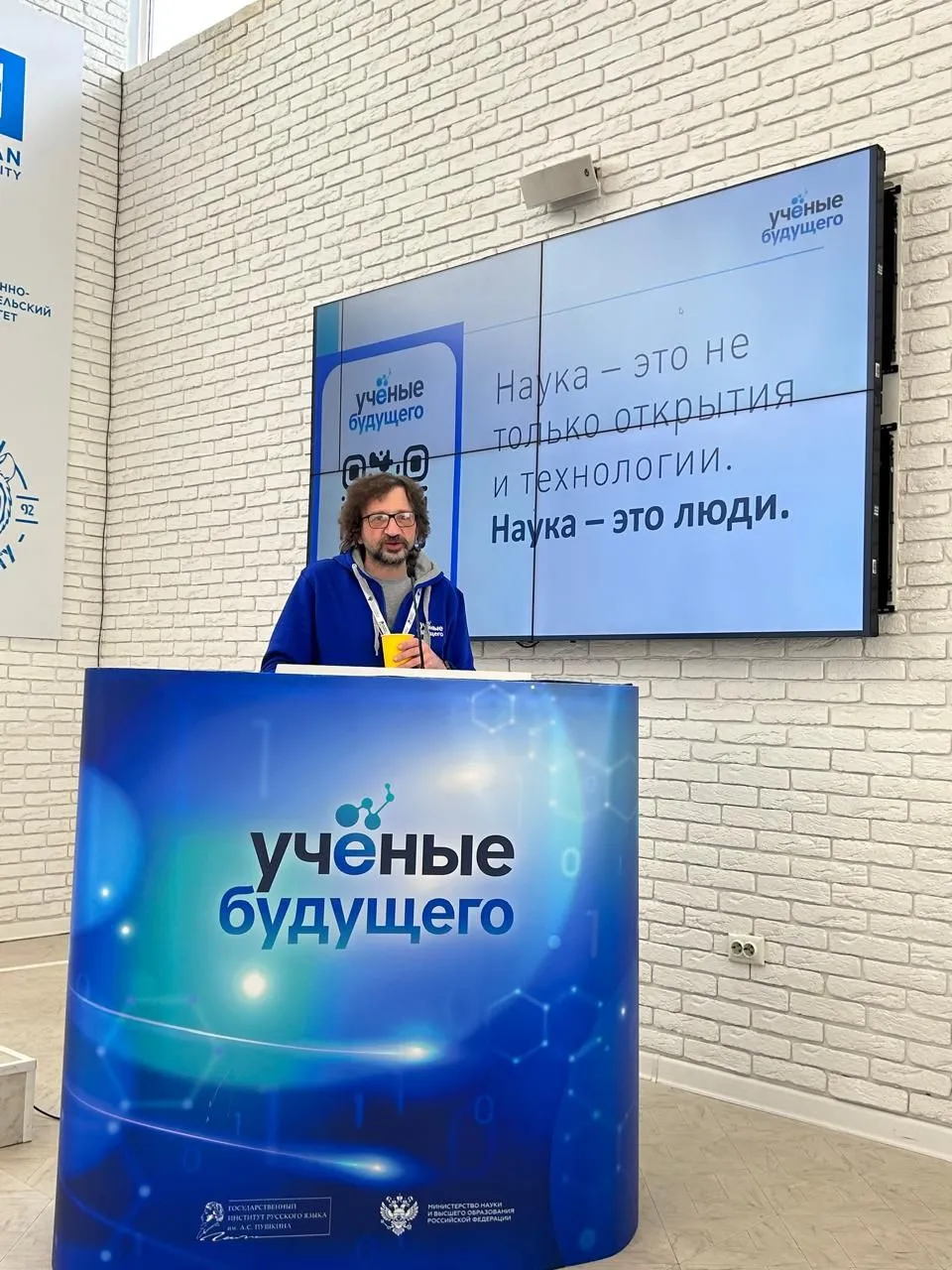
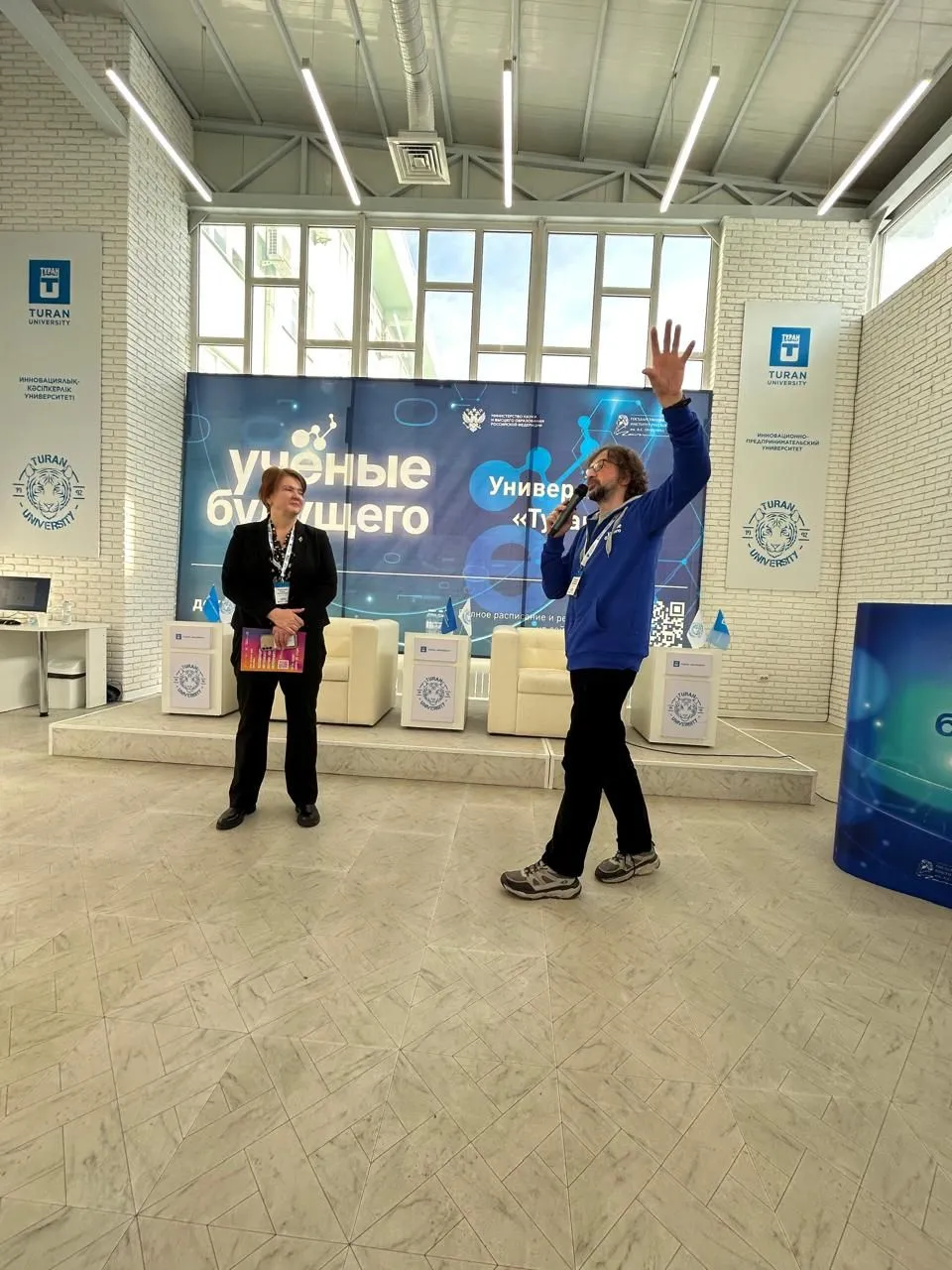
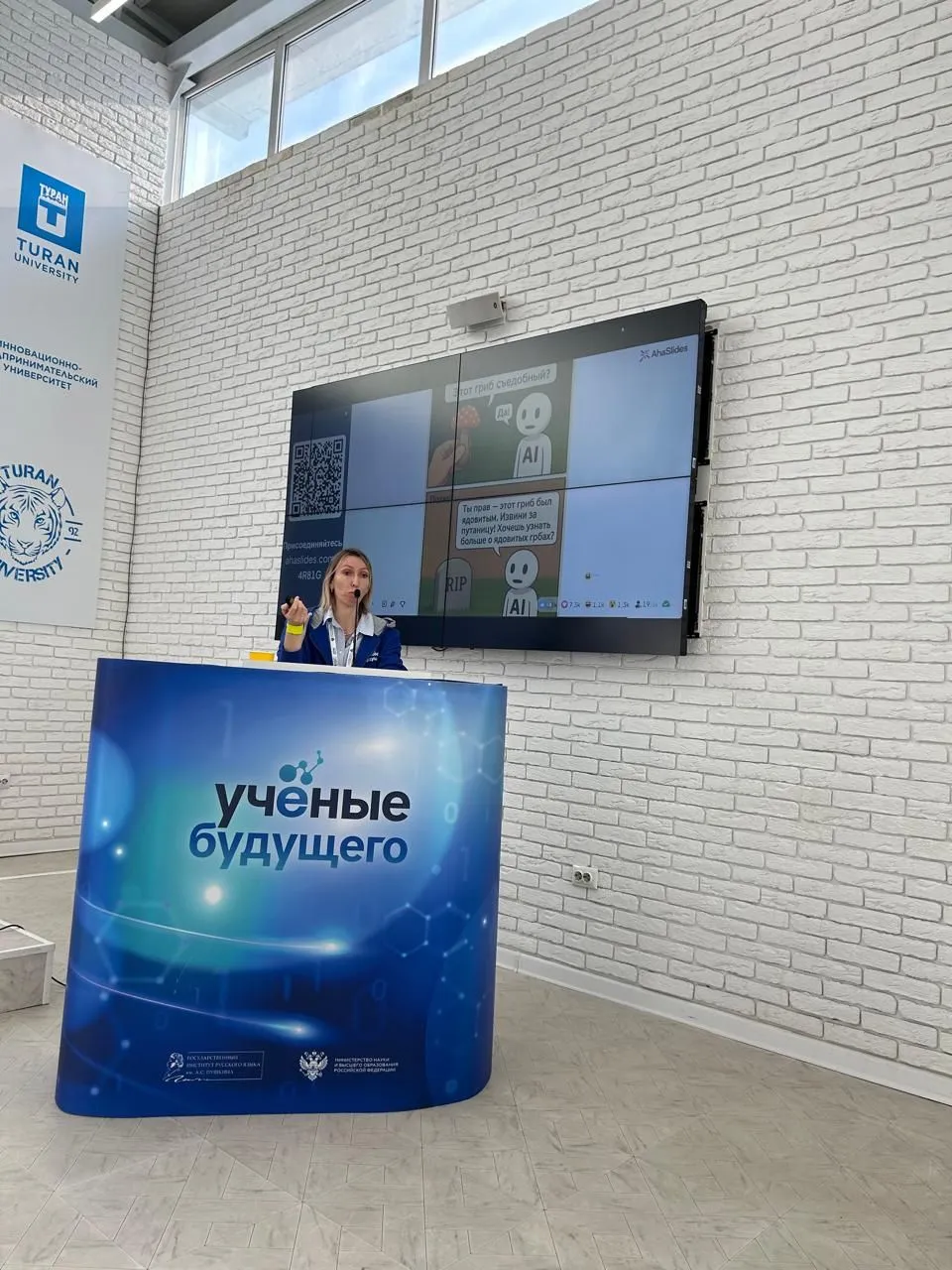
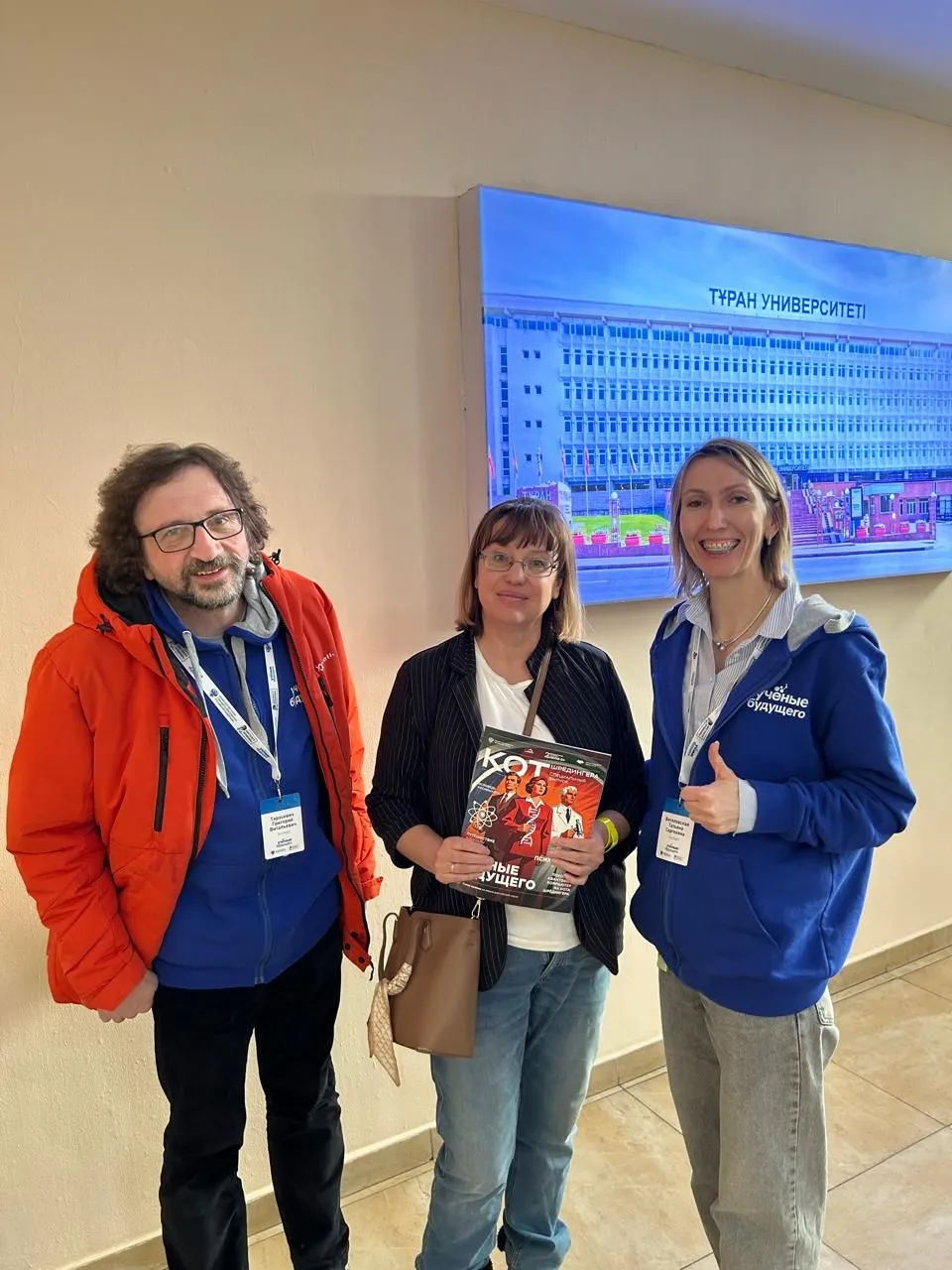
At Turan University, as part of the project, students met with Grigory Tarasevich, journalist and founder and editor-in-chief of the popular science magazine Schrödinger’s Cat. On a sunny winter morning, he walked around the White Hall in a blue hoodie, holding a yellow paper coffee cup, discussing the topic: “Journalism in the Age of Robots.”
“What sets us, the carbon-based, apart from the silicon-based?” he suddenly interrupted his speech.
Someone answered: mistakes. Another said: experience.
“What is my left hand, holding this cup of hot coffee, feeling right now?” the scientist persisted.
Ultimately, the discussion revealed a key truth: to stay ahead of neural networks, a journalist must live through experiences and convey them.
As evidence, Grigory shared his journey aboard a ship built without a single nail. It had no engine—only oars and sails, just like the ships of the Pomors in the 16th–17th centuries, who explored Siberia and the Arctic in such vessels.
“And my only advantage over a neural network,” the journalist waved his curls again, “is that I was on that boat! That I was rocked by the waves! That there were whole days when we couldn’t reach the shore because of headwinds! That my hands were raw from rowing—and that is my physical experience! Only I, a carbon-based journalist, can convey this. A neural network will never feel it.”
Recognizing that the future belongs to reporting grounded in lived experience, the audience thanked the speaker and eagerly set out to gain their own unique experiences. For many, this meant visiting the cozy university cafeteria to enjoy delicious borscht, stuffed cabbage rolls, or handmade manti.
“Scientists of the Future” is an international platform that brings together young people and leading scientific experts to exchange knowledge, inspire scientific achievements, and foster a culture of research. The project spans multiple countries, offers a variety of event formats, and promotes international scientific collaboration. It is supported by the Ministry of Science and Higher Education of the Russian Federation, the Ministry of Foreign Affairs of the Russian Federation, Rossotrudnichestvo, and the portal nauka.rf.